Clear, clinician-reviewed guides about hearing
Patient-facing articles by audiologist and ENT physician Ekaterina Kravchenko. The material is educational, avoids self-diagnosis and does not replace an individual medical assessment.

One or two hearing aids: when two are considered and how the decision is made
When both ears have aidable hearing loss, two hearing aids are often considered so the brain can receive useful information from both sides. But two devices are not automatically right for every profile.

Bone-conduction hearing solutions: who may be considered and how they differ
Bone conduction sends vibration to the inner ear through the skull rather than relying entirely on the outer and middle ear. It is considered for specific hearing-loss patterns.
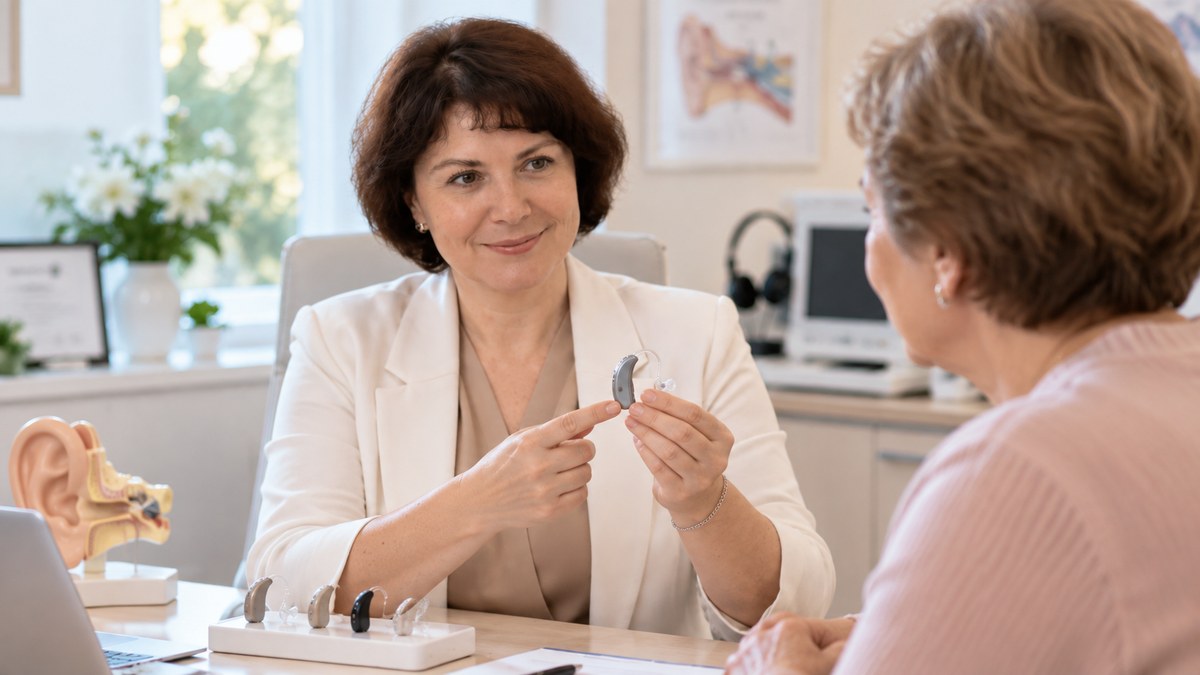
Hearing aid bought abroad: can it be programmed and serviced in Kazakhstan?
A hearing aid bought abroad is not automatically unusable in Kazakhstan. Support depends on the exact model, market version, programming compatibility and local service policy.

How to Get Used to Hearing Aids: A Practical Adjustment Guide
Short answer New hearing aids often make everyday life sound unexpectedly busy. You may suddenly notice paper rustling, footsteps, running water, dishes, traffic and your own voice much more clearly than before. That does not automatically mean…
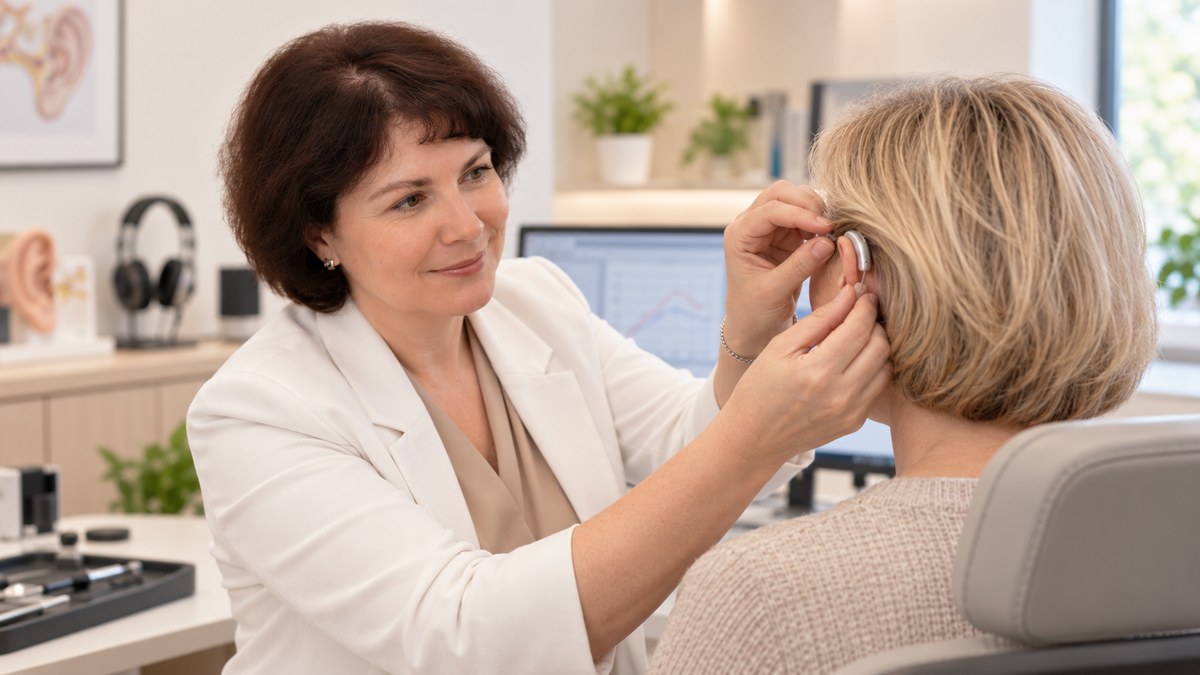
Why Does My Hearing Aid Whistle?
Short answer A hearing aid usually whistles when amplified sound escapes from the ear and is picked up again by the device microphone. That creates a sound loop called feedback. Feedback can be related to fit, earwax, programming or a device…
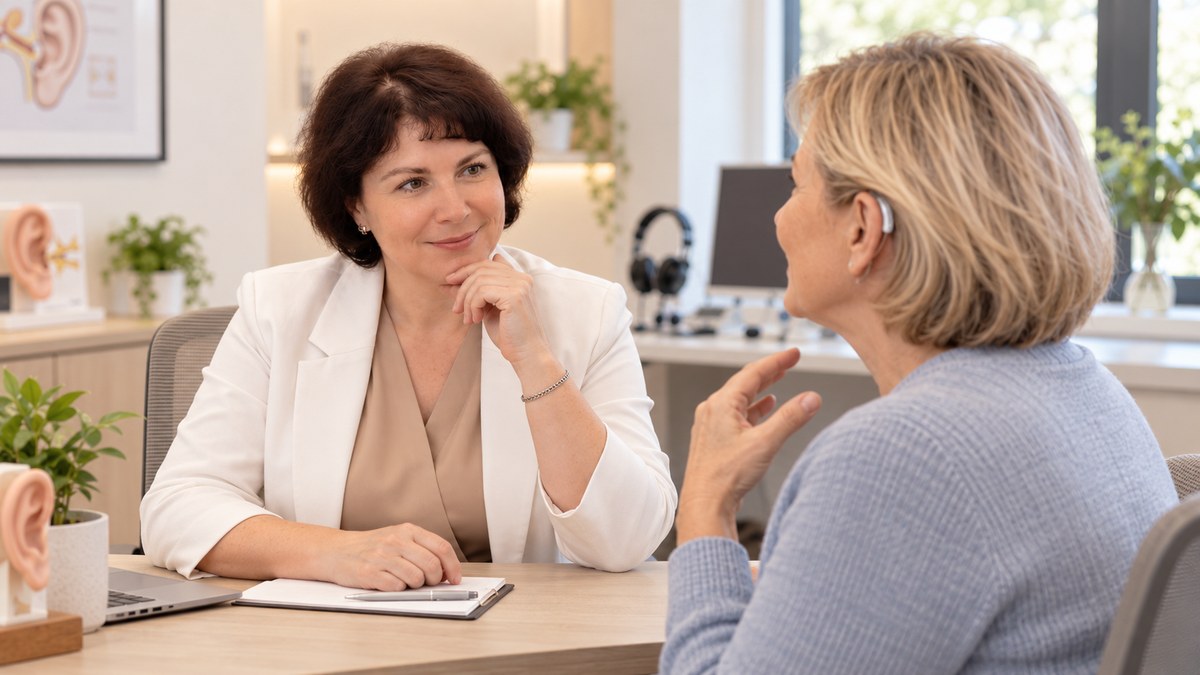
Why Does My Own Voice Sound Strange With Hearing Aids?
Short answer When you first wear hearing aids, your own voice may sound unusually loud, deep, hollow or blocked. Sometimes this is part of adjustment. In other cases, the fit of the earmould or device, or the programming, contributes to the…
Why Is Speech Still Hard to Understand in Noise With Hearing Aids?
Short answer Hearing aids can make speech more audible, but they cannot completely remove every competing sound or restore normal hearing. That is why many people notice a clear improvement at home but still struggle in restaurants, cars or…
Why Hearing Aids Need Follow-Up and Fine-Tuning
Short answer The first hearing-aid fitting is the beginning, not necessarily the final setting. In the clinic, the device can be programmed from your hearing test and checked for basic comfort, but real life shows what happens in restaurants…

How to Read an Audiogram: A Simple Patient Guide
Short answer An audiogram (An audiogram is a graph showing the softest sounds a person detects at different frequencies.) is a graph showing the quietest sounds you can hear at different pitches. The simplest way to read it is: left to right =…

I Struggle to Understand Speech in Noise, but My Audiogram Is Normal: Why?
Short answer Yes, this can happen. A standard audiogram (An audiogram is a graph showing hearing thresholds for tones at different frequencies.) measures the quietest individual tones you can hear in a quiet environment. Real conversations in a…

Age-Related Hearing Loss: Early Signs and When to Get Your Hearing Checked
Short answer Age-related hearing loss usually develops gradually. Because the change is slow, people often adapt without noticing exactly when listening became harder. Common early signs include: speech sounds less clear; asking people to…
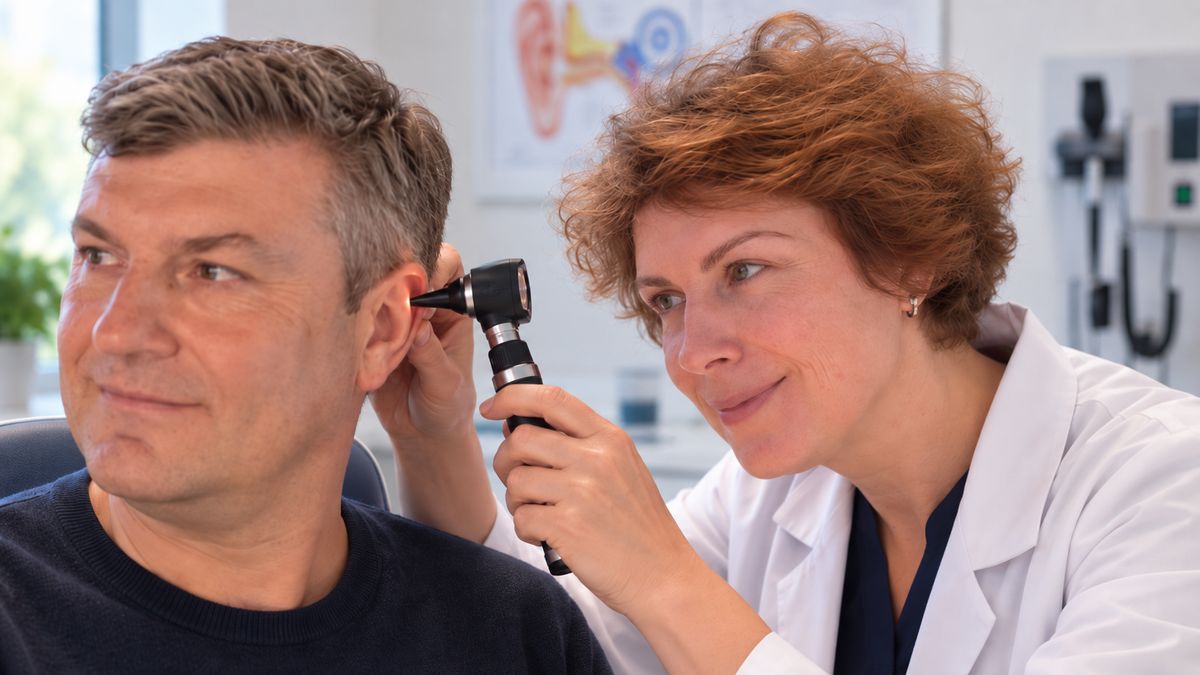
Sudden Hearing Loss: When You Need Prompt Medical Assessment
Short answer If your hearing drops noticeably over hours or a few days, especially in one ear, seek medical assessment promptly. The cause may be something relatively simple, such as earwax or a middle-ear problem. But you cannot reliably tell…
One Ear Hears Worse Than the Other: What Should Be Checked?
Short answer If one ear clearly hears worse than the other, it is better to test each ear separately rather than guess the cause from the sensation. The difference can come from many places: the ear canal, middle ear, inner ear or other parts…

ABR for Parents: What the Test Shows
Short answer ABR—auditory brainstem response—is an objective test that records the auditory system’s electrical response to sound using surface electrodes placed on the skin. A child does not need to press a button, raise a hand or tell the…

What ABR Can and Cannot Show About a Child’s Hearing
Main point ABR is one of the key objective tools for assessing hearing in infants and young children. It records electrophysiologic responses from the auditory pathway and, with frequency-specific protocols, can estimate hearing sensitivity…
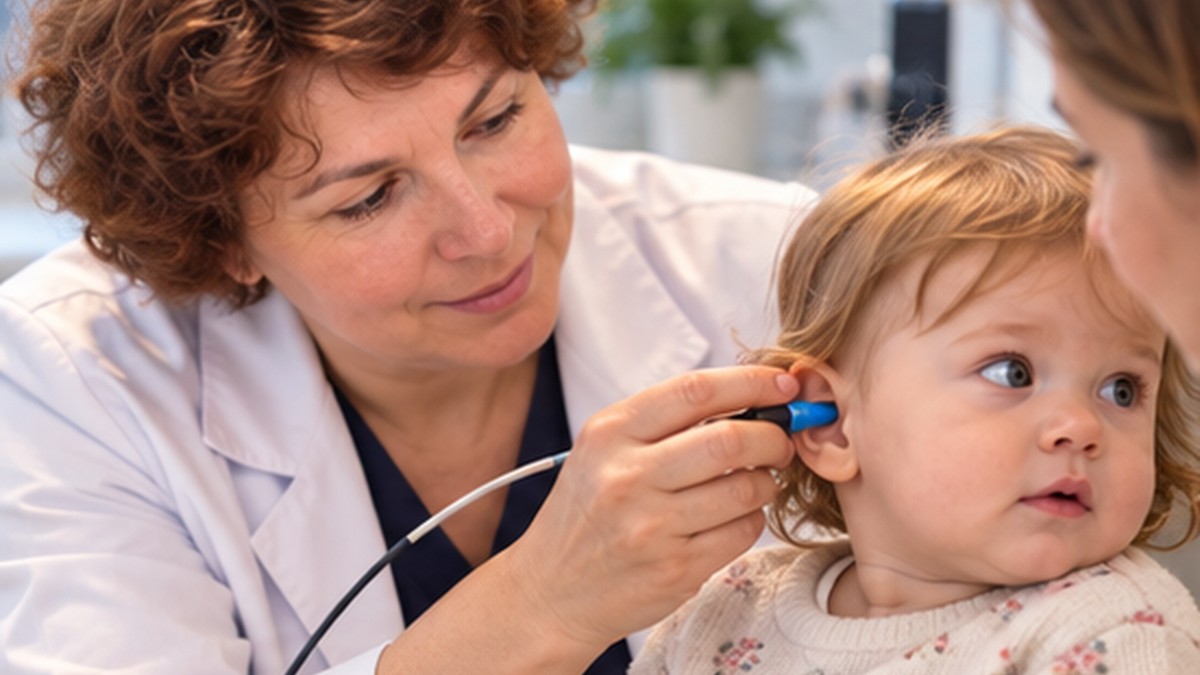
What OAE Can and Cannot Show About a Child’s Hearing
Short answer OAE—otoacoustic emissions—assesses the function of outer hair cells in the cochlea. It is an important objective tool in newborn and paediatric hearing screening and in broader diagnostic assessment. But OAE is not a complete…

When ASSR Adds Useful Information to a Child’s Hearing Assessment
Short answer ASSR—auditory steady-state response—is an objective electrophysiologic test. It can provide additional frequency-specific estimates of hearing sensitivity when a child is too young to complete reliable behavioural audiometry. ASSR…

How Objective Hearing Thresholds Are Estimated in an Infant
Short answer An infant cannot complete standard behavioural pure-tone audiometry in the same way as an adult. A baby cannot reliably press a button or raise a hand every time a sound is heard. For that reason, hearing sensitivity in early…

Baby Did Not Pass the Newborn Hearing Screen: What Happens Next
Short answer If a baby does not pass a hearing screen in the maternity hospital or at a repeat screen, it does not automatically mean the baby has hearing loss . Screening is designed to identify babies who need the next level of hearing…

Child Not Responding to Their Name: When to Check Hearing
Short answer A child who does not respond to their name does not automatically have hearing loss. The sign is not diagnostic by itself. It does, however, justify discussing hearing when it is persistent or appears together with other…

Speech Delay and Hearing: When Should a Child See an Audiologist?
Short answer When speech development is delayed, hearing is worth assessing even if the child seems to “hear everything.” A response to loud sounds, music or cartoons does not show how clearly the child receives quiet speech, different…

OAE, ABR and ASSR: How Are These Children’s Hearing Tests Different?
Short answer OAE, ABR and ASSR are not interchangeable tests . They assess different parts of the auditory system and answer different clinical questions. OAE assesses outer-hair-cell function in the cochlea. ABR records electrical responses of…

How to Prepare a Baby for a Natural-Sleep ABR Test
Short answer For a good-quality ABR recording, a baby needs to be as calm and still as possible . In young infants, ABR can often be completed during natural sleep without medication. Preparation is usually about aligning the appointment with…

Tinnitus: possible causes, warning signs and when to check your hearing
Ringing, buzzing, humming or other sound without an external source is called tinnitus. It is a symptom rather than a diagnosis, so the useful questions are whether hearing has changed and whether any warning signs are present.

How to check a child's hearing: a practical guide by age
Children respond to sound differently at different ages. The right test therefore depends not only on age, but also on the clinical question, development and whether the child can reliably take part in a behavioural test.

How to choose a hearing aid: what matters before brand and price
The best hearing aid is not automatically the newest or most expensive one. It is the device that matches the hearing loss, everyday listening needs and a fitting plan that can be adjusted over time.
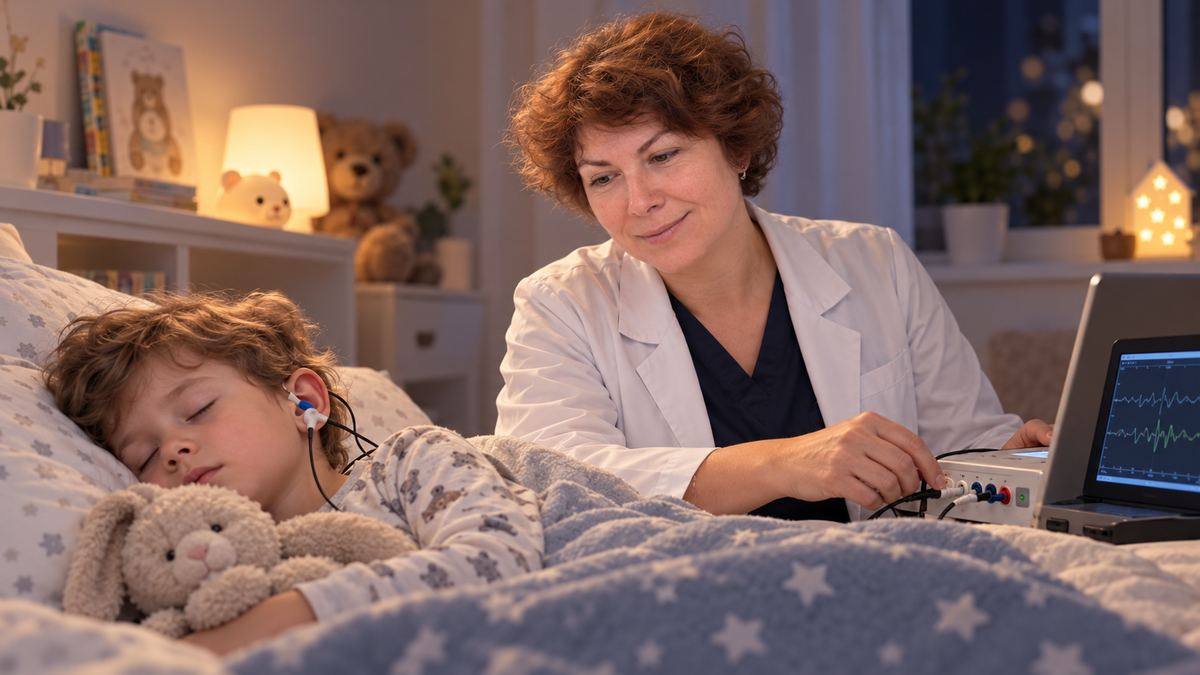
Hearing assessment during natural sleep: how ABR and ASSR are performed in children
ABR and ASSR record very small auditory responses, so movement can interfere with the signal. In some infants and young children, natural sleep provides the quiet conditions needed without medication.

Cochlear implantation: how candidacy is assessed and decisions are made
A cochlear implant decision is not based on one audiogram or one brand. Hearing levels, benefit from well-fitted hearing aids, speech understanding, age, hearing history and rehabilitation potential are considered together.