Why does sleep help?
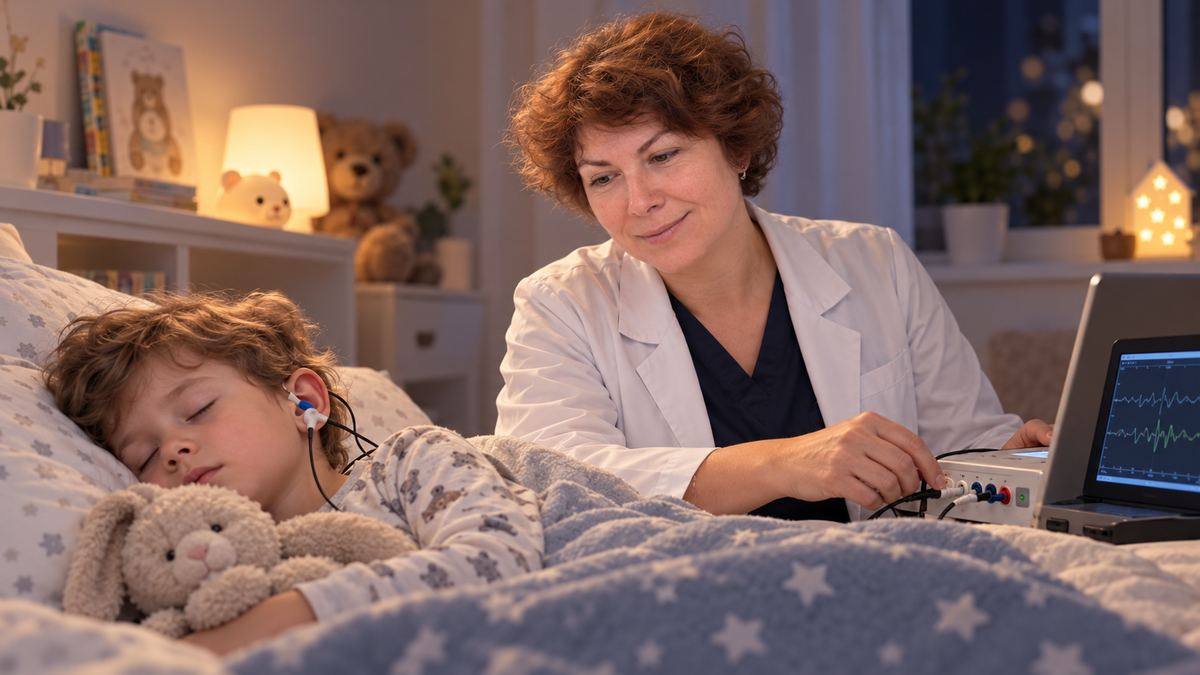
ABR and ASSR measure very small electrical responses to sound. Muscle activity and movement can obscure those signals, so a calm or sleeping child is important for good-quality recordings.
Who may be suitable for natural-sleep testing?
Infants and some young children can often be tested by planning the appointment around their normal sleep pattern. Natural-sleep testing is not the right solution for every child or every clinical question; the test type and setting should be chosen individually.
How can parents prepare?
Scheduling close to a usual sleep period can help. Depending on age, the clinician may suggest keeping the child awake beforehand, adjusting feeding time or bringing familiar sleep items. Follow the specific instructions provided for the appointment rather than using a generic routine.
What do ABR and ASSR tell us?
ABR assesses the auditory pathway's response to sound. ASSR can help estimate thresholds at several frequencies. Results are interpreted alongside other information such as OAE, tympanometry and the child's history.
What if the child does not sleep?
If movement makes the recording unreliable, it may be safer to stop and repeat the assessment rather than force a poor-quality result. The aim is reliable information, not simply completing the test as quickly as possible.