Short answer
A hearing aid usually whistles when amplified sound escapes from the ear and is picked up again by the device microphone. That creates a sound loop called feedback.
Feedback can be related to fit, earwax, programming or a device problem. Whistling does not automatically mean the hearing aid is broken, but frequent feedback should be investigated.
Common causes
The aid or earmould does not fit tightly enough
If sound leaks around the device, it can return to the microphone. This may become more noticeable when chewing, wearing a hat or after the shape of the ear changes.
Earwax changes the acoustics of the ear canal
Wax can affect how sound travels in the ear and contribute to feedback. Do not try to remove deep wax with cotton swabs or other objects. If you feel blocked, sore or notice a hearing change, have the ear checked safely.
Programming and gain
Sometimes amplification at certain frequencies is too high for the current fit. Turning the entire hearing aid down may reduce the whistle, but it may also make speech less audible. A targeted adjustment is usually more useful.
A part is worn or damaged
Tubing, earmoulds, receivers or other components can wear out and change the acoustic seal.
What can I safely check at home?
- Make sure the device is inserted fully and correctly.
- Check external filters and visible parts according to the manufacturer instructions.
- Charge the device or replace the battery if performance is unstable.
- Look for obvious damage to tubing or the earmould.
- Note exactly when the whistling happens.
Useful notes include: “only under a hat”, “when I hold the phone near the ear”, “constant on the right side” or “started after several months”.
What should I avoid doing myself?
Do not:
- drastically reduce all amplification settings;
- drill or cut vents in an earmould;
- reshape the earmould yourself;
- use objects deep in the ear to remove wax;
- dismantle the hearing aid unless the instructions specifically allow it.
When should I book a check?
Arrange a fitting/programming follow-up if:
- feedback is frequent or constant;
- it started after a long period of good performance;
- the hearing aid no longer fits securely;
- speech has gradually become harder to understand without a sudden change in hearing;
- you keep turning the aid down just to stop the whistle.
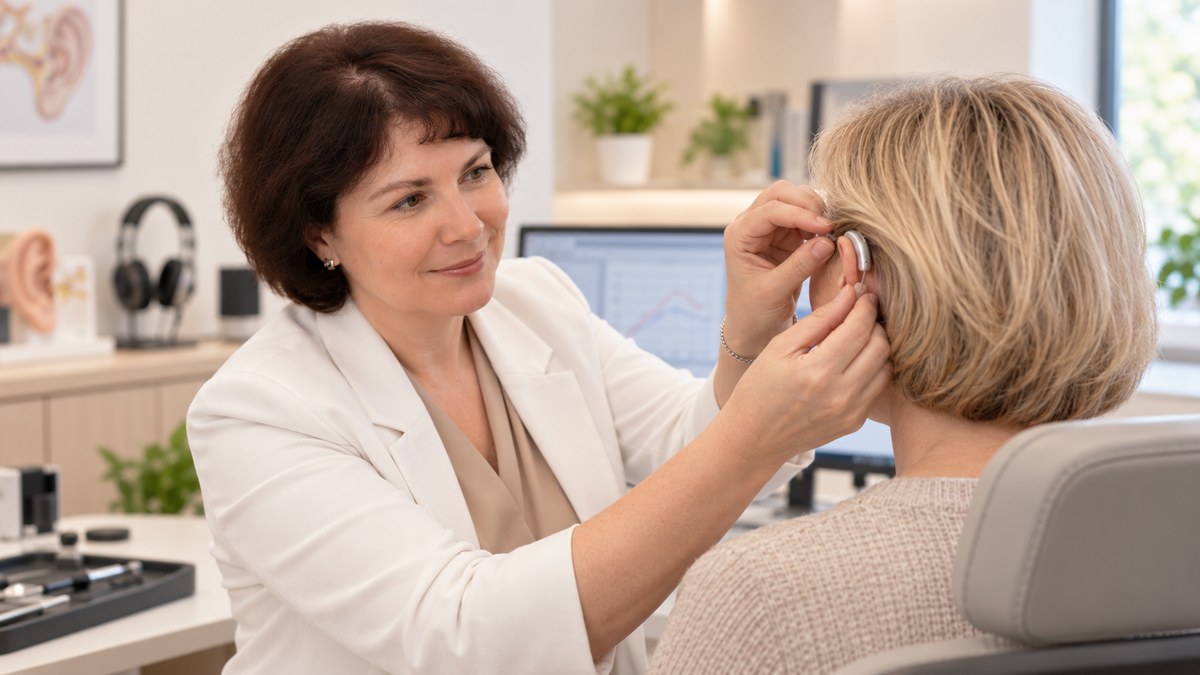
The clinician can review fit, the earmould and programming and, when needed, examine the ear.
If hearing drops suddenly or changes markedly in one ear, or you develop new ear pain, discharge, significant dizziness or other acute ear symptoms, seek medical assessment rather than treating the problem as routine hearing-aid feedback.
FAQ
Does feedback mean the hearing aid is poor quality?
No. Feedback can happen when fit, ear acoustics or programming changes.
Can I just turn the volume down?
Sometimes that reduces feedback, but it may also reduce speech audibility. It is better to correct the cause.
Can earwax cause feedback?
It can affect ear-canal acoustics and contribute to the problem. Suspected wax should be checked safely.
Hearing-aid fitting in Almaty
Ekaterina Vladimirovna Kravchenko provides hearing-aid fitting and follow-up in Almaty. A visit can check whether the problem is related to the ear, fit, device condition or programming.
Related pages:
Sources and clinical guidance
- NIDCD — Hearing Aids: feedback/whistling and fit or adjustment review
- ASHA — Hearing Aids for Adults: fit, performance and fitting verification
This article is for information and does not replace an in-person medical assessment or individualized hearing-aid fitting.